

Passive Physiotherapy Fails:
7 Reasons Why (And The Active Cure)
Exposing the medical illusion of temporary relief, and how we are changing healthcare in Haryana.
If you are currently relying on passive physiotherapy, you are likely trapped in the most frustrating, exhausting cycle in the medical world.
You experience a sudden, agonizing surge of pain. Perhaps it is a sharp, electrical sting in your lower back when you bend to tie your shoes, or a deep, throbbing ache in your shoulder that makes sleeping impossible.
You do what anyone seeking chronic pain relief would do. You visit a standard clinic. You are instructed to lie face down on a treatment plinth. For the next 45 minutes, machines buzz, vibrate, and heat your skin.
When the machines are turned off, you feel significantly lighter. You walk out to your car thinking, “Finally, the healing process has begun.”
⚠️ The Brutal 72-Hour Reality Check
But within 48 to 72 hours, the illusion shatters. The familiar stiffness creeps back into your joints. You book another appointment to lie on the exact same table. You are not on the road to structural recovery; you have unknowingly become a permanent subscriber to temporary pain relief.
📋 Table of Contents
- 1. What Exactly is Passive Physiotherapy?
- 2. The Science of Deception: Masking Pain
- 3. The 7 Fatal Flaws of Passive Treatment
- 4. The Active Rehab in Rohtak Solution
- 5. When is Passive Care Actually Acceptable?
- 6. Frequently Asked Questions

Passive Physiotherapy Often Treats Symptoms — Not the Cause
Electrical stimulation, heat therapy, and passive modalities may provide short-term comfort,
but lasting recovery requires movement correction, strength rebuilding, and active rehabilitation.
1. What Exactly is Passive Physiotherapy?
In clinical practice, treatments fall into two distinct categories: Passive and Active. Understanding the difference is the first step toward permanent healing.
Passive physiotherapy is any treatment that requires absolutely zero physical effort, engagement, or biomechanical output from the patient. You are completely passive while a modality is applied to your body.
In traditional clinics, these modalities make up the entirety of a treatment protocol. The most common culprits include:
- ⚡
Using an IFT machine for back pain:
Electrical currents used to stimulate superficial nerves to temporarily confuse pain receptors.
- 🔊
Therapeutic Ultrasound:
A wand that uses high-frequency sound waves to generate localized deep heat within tissues.
- 🌡️
Hot Packs and Ice (Cryotherapy):
Temperature application to artificially alter localized blood flow and reduce superficial inflammation.
Do these modalities feel good? Absolutely. Do they provide temporary relief? Frequently.
Do they alter your physical structure or correct mechanical dysfunction? NEVER.
2. The Science of Deception: Masking Pain
To understand why passive physiotherapy fails as a permanent cure, you must understand a neurological concept called the Gate Control Theory of Pain.
When a bulging disc presses against a nerve, it sends a continuous “danger” signal to your brain. Your brain translates this neurological signal as severe pain.
When a therapist applies an IFT machine to your back, it sends a new, non-painful warming sensation. Because these pleasant signals travel on faster nerve fibers, they reach the spinal cord first.
By arriving first, they effectively “close the neurological gate” on the slower-moving pain signals. The machine successfully tricks your brain into ignoring the pain.
However, the physical bulging disc remains exactly where it was. You have merely masked the symptom. It is the medical equivalent of placing black tape over your car’s “Check Engine” light. When the session ends, the alarm screams again.
3. The 7 Fatal Flaws of Passive Physiotherapy
When clinics rely exclusively on machines and hot packs, patients suffer the severe consequences of an incomplete medical model. Here are the 7 reasons it fails:
Flaw 1: Treating Symptoms, Ignoring the Source
If you suffer from sciatica, the leg pain is just the symptom. The source might be catastrophic core weakness. Passive physiotherapy only addresses the localized area, ignoring the biomechanical root cause entirely.
Flaw 2: The Dangerous “Atrophy Trap”
Many clinics advise patients to “rest and let the machines work.” Prolonged rest leads to rapid muscle atrophy and severe joint stiffness. Lying passively on a bed actually causes your structural support system to deteriorate.
Flaw 3: The “Endless Package” Dependency
Because relief fades within hours, patients are sold massive 20-day “treatment packages” just to maintain daily comfort. You are renting pain relief, not investing in a structural cure.
Flaw 4: Zero Improvement in Load Capacity
Your body needs to withstand the stress of daily life (lifting, walking, sitting). Machines do not increase the physical load capacity of your tendons or ligaments. Only targeted resistance and movement can do this.
Flaw 5: It Creates a Fear of Movement
When you are told to rely on machines, you become terrified of moving your own body. This psychological barrier, known as kinesiophobia, delays healing drastically.
Flaw 6: Outdated Medical Science
Global research has moved on. Modern medical literature overwhelmingly supports active movement over passive modalities. Clinics relying on the latter are decades behind current science.
Flaw 7: A Massive Financial Drain
Paying daily fees for treatments that do not provide long-term fixes is a severe drain on your finances. You are paying for a band-aid rather than a surgical repair.
4. The Active Rehab in Rohtak Solution
At Motion Balance in Sector 2, guided by the best physiotherapist in Rohtak (Dr. Sahil Mittal), we reject the standard model. We utilize an internationally validated biological process called Mechanotransduction.
This is the physiological process where your cells sense mechanical loads—like exercise and resistance training—and convert them into cellular responses that actually build stronger, thicker tissue.
When you place a strategic load on a damaged ligament after ACL surgery, you stimulate fibroblasts to lay down new collagen. You signal your body to rebuild its own architecture.
You cannot heal a structural weakness with passive physiotherapy. You must load it.
This is Active Rehabilitation.
| Medical Metric | ❌ Passive Clinics | ✅ Motion Balance |
|---|---|---|
| Primary Tool | Electrical Machines & Heat | Biomechanics & Active Movement |
| Patient Role | Lying Down, Sedentary | Engaged, Educated, Moving |
| Medical Goal | Dull the pain alarm temporarily | Rebuild tissue & eliminate root cause |
5. When is Passive Care Actually Acceptable?
At Motion Balance, we are an evidence-based practice. We do not entirely banish passive physiotherapy; we simply refuse to use it as a primary cure.
There is a specific, narrow clinical window where it is appropriate: the severely acute, hyper-inflammatory phase of an injury.
If a patient comes to us with massive pain where they cannot physically stand straight, forcing them into aggressive exercise is wrong.
In these severe cases, we use targeted pain-modulation to calm the nervous system. However, the moment that pain drops, we transition immediately to Active Rehab. It is a temporary stepping stone, never the destination.
Stop Masking The Pain
Ready to Finally Fix the Root Cause?
If you are tired of passive physiotherapy offering zero long-term results, it is time to wake up to the medical reality. Healing is an active process. Book your consultation with the top specialists in Haryana today.
Secure Your Priority Assessment Now
📍 Motion Balance Advance Multispeciality Physiotherapy | Sector 2, Rohtak
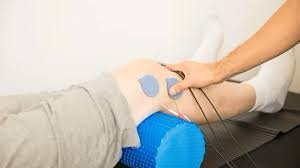
Passive Therapy Gives Temporary Relief. Active Rehab Fixes the Root Cause.
Many patients stay dependent on heat packs, machines, and short-term pain relief.
Active rehabilitation focuses on restoring strength, movement, stability, and long-term recovery.
6. Frequently Asked Questions
❓ Why do doctors still prescribe passive physiotherapy?
Many physicians prescribe standard therapy expecting the therapist to use modern clinical judgment. While science has evolved to prioritize biomechanics, many clinics have not updated their protocols because plugging in a machine is much easier than coaching a patient through complex movements.
❓ Will abandoning passive physiotherapy make my pain worse?
Absolutely not. At Motion Balance, we use “pain-free progressive loading.” Dr. Sahil and Dr. Avi find your directional preference—gentle movements that actively reduce symptoms—and build your program safely from there.
❓ How long does active rehab take?
While passive physiotherapy relief vanishes in hours, active rehabilitation builds permanent results. You will experience symptom relief quickly, but true biological tissue adaptation typically takes 4 to 8 weeks of targeted clinical loading.